Unarmored Reflection: When Does Truth Become “Disparagement”?
George Washington, Public Memory, and the Politics of “Disparage”


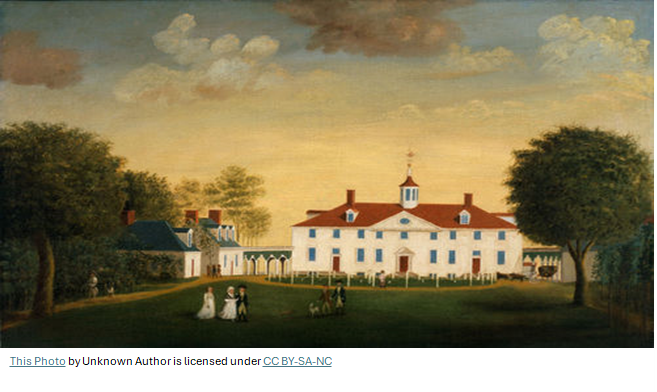
An Unarmored Reflection is my attempt to slow the conversation down long enough to ask better questions—especially the one that keeps creating space for learning: “What do you mean?”
Doug Krugman’s recent LinkedIn article inspired me to revisit something I thought I already understood. His distinction between disapproval and disparagement didn’t just resonate—it sent me back into research.
That curiosity led me to the history of the President’s House site on Independence Mall. Where interpretive panels once named the lives of enslaved people alongside the first presidency, there are now bolt holes and silence. That change—and the reasoning behind it—became the starting point for the questions that follow.
One line from Doug kept echoing:
“Disapproving of his ownership of other human beings is not disparaging him.” At first, it felt obvious. Moral condemnation doesn’t require character assassination. A mature society should be able to hold admiration and accountability at the same time. But the more I thought about that sentence, the more the question became whether we’re willing to live up to it in public.
The Move Hidden Inside “Disparaging”
Doug’s line pushed me into a place I’ve learned to pause intentionally asking “What do you mean?”
Not as a challenge.
Not as a trap.
But to slow the conversation down enough for learning to occur.
In my experience, “What do you mean?” is where clarity begins. It’s where assumptions surface, definitions get tested, and shared realities can start forming—especially when people are discussing history, beliefs, or values that carry emotional weight. So, I took Doug’s claim seriously and asked the question directly:
What counts as “disparagement,” and who gets to decide?
In everyday language, to disparage is to lower someone’s standing—to attack reputation or dignity. As I hear Doug’s distinction, he’s arguing that we can tell the truth about slavery without turning George Washington into a caricature. We can reject hero worship without resorting to cheap shots. Critique doesn’t require contempt.
That framing made sense to me. But once I slowed the conversation down, I noticed how often the word disparage gets used not to clarify meaning, but to end discussion altogether. A working distinction helped sharpen things:
Disapproval names what happened and why it was wrong—using evidence, context, and moral clarity.
Disparagement turns people into cartoons—mockery, distortion, insinuation, and moral theater.
Once that line comes into focus, it becomes harder to ignore how often the two are collapsing—and what gets lost when they are.
What Gets Lost When the Line Blurs
If we take Doug’s sentence seriously, neither extreme work. Softening slavery into a vague “flaw” to preserve reverence doesn’t honor the truth. But neither does treating every honest mention of slavery as an attack on the American project. The posture that makes sense to me is both/and: moral clarity and historical precision.
That posture requires discipline—especially this one: keeping enslaved people in the frame. Names. Lives. Risks. Acts of courage. Otherwise, the conversation quietly shifts from human beings to reputations. That’s how erasure happens without announcing itself.
When Words Become Policy
This is where Philadelphia matters. The removal of interpretive materials at the President’s House site—materials that highlighted the lives of people enslaved by George and Martha Washington—changed what the space was allowed to teach.
The public dispute that followed, along with broader efforts to align historical interpretation with “shared national values,” exposed a problem I can’t unsee when institutions can’t separate disapproval from disparagement, the safest move becomes avoidance. Flatten the story. Remove friction. Say less.
But a civic space that can’t name slavery plainly isn’t neutral—it’s incomplete.
Doug’s sentence insists disapproval and disparagement are different things. Policy posture increasingly treats certain kinds of disapproval as the thing to avoid. That’s the quiet power of the word disparage when it becomes a civic standard—it blurs documentation into disrespect.
The Record Doesn’t Need Embellishment
The historical record in Philadelphia is clear. Pennsylvania’s gradual abolition laws placed limits on slaveholding. Washington responded by deliberately rotating enslaved people out of the state to avoid residency thresholds that could lead to emancipation. You don’t need to hate Washington to say that. You don’t need to deny his significance to notice the calculation. You simply need to take enslaved people seriously as human beings whose lives contradicted the ideals being articulated at the nation’s founding.
For me, everything sharpens when I think about Ona Judge—her escape, her refusal to return, and her insistence on remaining free. Her story exists because the “great man” frame can’t contain the whole truth.
Why Honest History Feels Like an Attack
This is the question that lingered for me: Why does honest history feel threatening to some people? Part of the answer is emotional. National pride can feel fragile. Complexity can feel like erosion. Part of it is political. Control the story of the past, and you shape the moral vocabulary of the present. Once you see that, debates over exhibits, curricula, and public markers stop being about plaques. They’re about permission—what a society is allowed to remember out loud.
Without Doug’s distinction, institutions swing between sanitized celebration and scorched-earth condemnation. Neither build understanding. I believe when we stop asking “What do you mean?”, accuracy gives way to comfort—and truth quietly becomes negotiable.
 | A guest post by
|